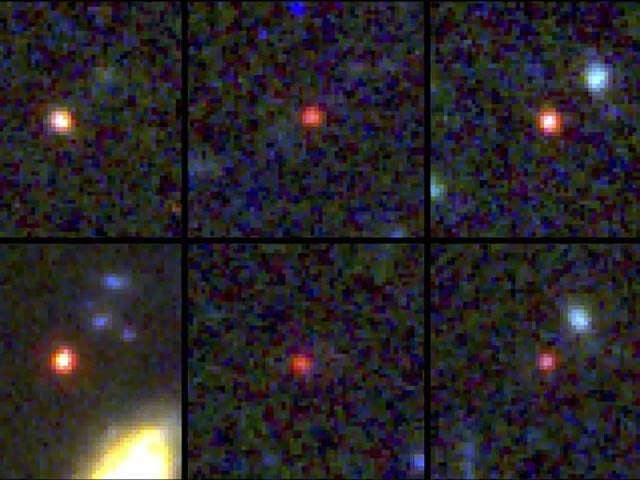

Galaxies that were developed fifty (50) to seventy (70) million years after the Big Bang from the James Webb Space Telescope have opposed our existing views.
Some of the most vital galaxies seen by the James Webb Space have found that should have been in their early stages but are fully visible and massive.
California
According to the report published in a weekly scientific journal Nature, the discovery challenges our existing theories of galaxy formation. Astronomer Joel Leja of Pennsylvania State University and his colleagues say that
we would have expected very small, early, baby galaxies shortly after the formation of the universe, but instead found galaxies like our own (Milky Way), which is surprising.
Joel Leja
We know that James Webb shows IR light instead of normal visible light. Its sensitive and state-of-the-art mirrors can see so far that we can go back in time to the very beginning of the creation of the universe. Modern research suggests that the universe began with the Big Bang about 13.7 billion years ago, while the James Webb Space Telescope is now showing images nearly 13.5 billion years old.
According to Professor Joel,
A few of these galaxies have completely denied 99% of our current models of galaxy formation. Now we must rethink the process of birth, evolution, and formation of galaxies. Most of these theories suggest that galaxies form from small clusters of gas and clouds and continue to grow over time, but this process is time taking. This is why many queries have been raised about the theories of galaxy formation in the early universe.
Important thing is that these images from James Webb were posted to public in July last year, which showed these star-filled galaxies as significant points of light. At first specialists thought it was an error, but despite repeated data processing, the galaxies turned out to be as large and as clear as possible.
Then the experts carefully analyze the data spectrum and repeatedly verified their distances. It is now known that the mass of the early universe is hundred (100) times more than we projected and now this problem can keep professionals busy for a long time.